

About Gabriel Figueroa
Gabriel Figueroa
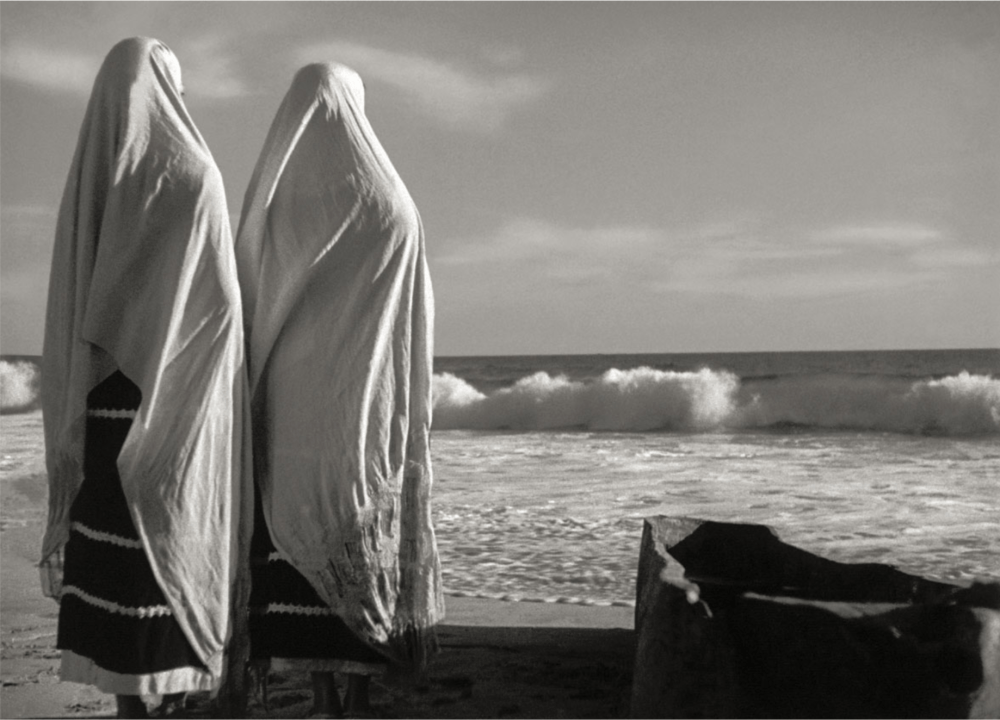
Gabriel Figueroa, born in 1907 in Mexico City, has secured a very special place among the great inventors, photographers, and cinematographers of the 20th century. Figueroa’s black and white images are powerful evocations of Mexico’s rural past, but his insight goes beyond discovery, expression, and powerful visual beauty.
Considered the premier Cinematographer of Mexico’s Golden Age of Film, between 1930-1960, Figueroa was nominated for several awards, including the Oscar in 1964. He was also honored for his work on the film Macario, at the Cannes film festival. Figueroa was the cinematographer for such films as The Fugitive (John Ford), Under the Volcano and The Night of the Iguana (John Houston), La Perla (Emilio “Indio” Fernández), and Los Olvidados (Luis Buñuel).

the collection
Gabriel Figueroa is known for the meticulous detail he applied to his work. The collection comprises of photographic images taken from the original 35 mm light test strips. Before going to the studio to film each day, Figueroa would visit the laboratory. Here, he would check light tests, which consisted of a photogram of a scene printed at different light levels and numbered in the left of the frame. From the tests, he would decide at which stop the scene would be printed. This attention to detail in the laboratory ensured a consistent visual style throughout the film. There are 20,000 strips in the archive, of which 1000 were examined and selected by Figueroa himself.
Of those 1000 images, 300 were digitally restored over a 5-year period. The decision to digitalize the images was made taking into account artistry, preservation and archival consideration. Digitalizing the images was considered the most stable way to preserve the nitrate-based images and the process, which would give the most faithful renditions of the original images. Today, these images are better preserved than the films themselves. Figueroa’s son, master printer Gabriel Figueroa Flores, has worked for 20 years preserving, digitalizing and printing these images. He has further selected 350 images to add to the original selection made by his father.
All the work has been carefully chosen to demonstrate the most important creative and artistic work of Figueroa Sr. All are impeccable examples of how the master cinematographer used lighting, composition and chiaroscuro in both landscape and portraits.
Throughout forty years, in the company of men as equally passionate in the craft of creating images, I have done nothing more that to define the boundaries of reality in the hands of the camera. This exceptional privilege has taught me to lead the senses to the heart of reality and to base myself on the insight achieved by important inquisitors of the human soul.
I can say that I have never been detached from my own time. By transfiguring reality with a mechanical instrument, reality transfigured me and made me grow as a man among men.
To tell stories, to evoke stories, to invent stories: my life has been nothing more than an accident in that universe already populated by timeless beings.
During these moments, I remember men like Diego Rivera, José Clemente Orozco, David Alfaro Siqueiros, Leopoldo Méndez: treasures of Mexican art, masters of color and light, and teachers who taught me the way of observing men and objects. I am certain that if I am to have any merit, it is to know how to utilize my eyes, to guide the cameras in the task of capturing, not only colors, shadows, and light, but the movement that is life.
 correiaprojects.com
You must be logged in to post a comment.